🚧
What is not built yet
Planning the training year
Homework is the small version of a much bigger thing, and the bigger thing is next: sessions planned across a whole season rather than a week at a time, and a team library of session drills sitting on the same foundation as the one already here — so a Tuesday in March is something you pick rather than something you invent at 17:40.
Sparring on the position they play
A winger works on things a centre back never will, and "practise at home" is not advice. So the next piece is individual training per position — the seven a coaching conversation actually happens at: keeper, centre back, full back, central midfield, attacking midfield, winger, striker.
Two halves of it. A set of drills for each position, written for the age they are. And Kicksy, the app’s AI coach, to talk a session through with — what to work on with this player, this month, given where she actually plays.
The way in is already in the app: put a player on the position board and her own page lists the positions she is being trained for. The panels are there and say plainly that they are under construction, because we would rather you saw the shape and told us it was wrong than found it finished and unusable.
Seeing what they train at home
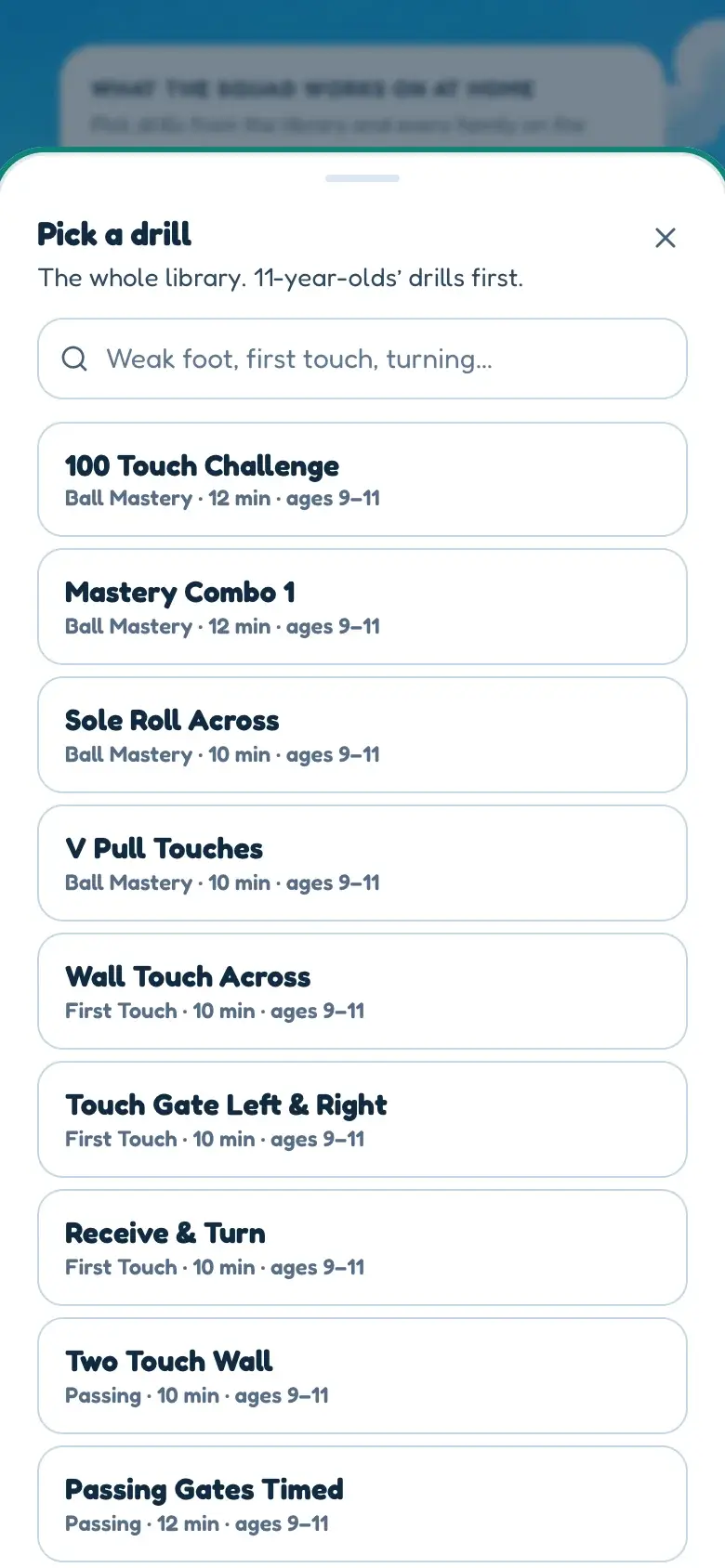
Homework goes out. Nothing comes back. You can point the squad at a drill and every family sees it — but the app will not tell you who did it, how often, or for how long, and no screen on the coach side shows a child’s own training log.
That one has to be built carefully rather than quickly: a child’s training belongs to their household, so the switch that would ever allow it sits with the family, off, and nothing reads it yet.
Both are here because we would rather build them with coaches than for them. Tell us what you would actually use, and it changes the order things get made in.