BallQuest

Features

Everything in the app, in plain words.

No mystery. This is what BallQuest does today — on the phone in a pocket, and out on the grass where it has to survive.

The library

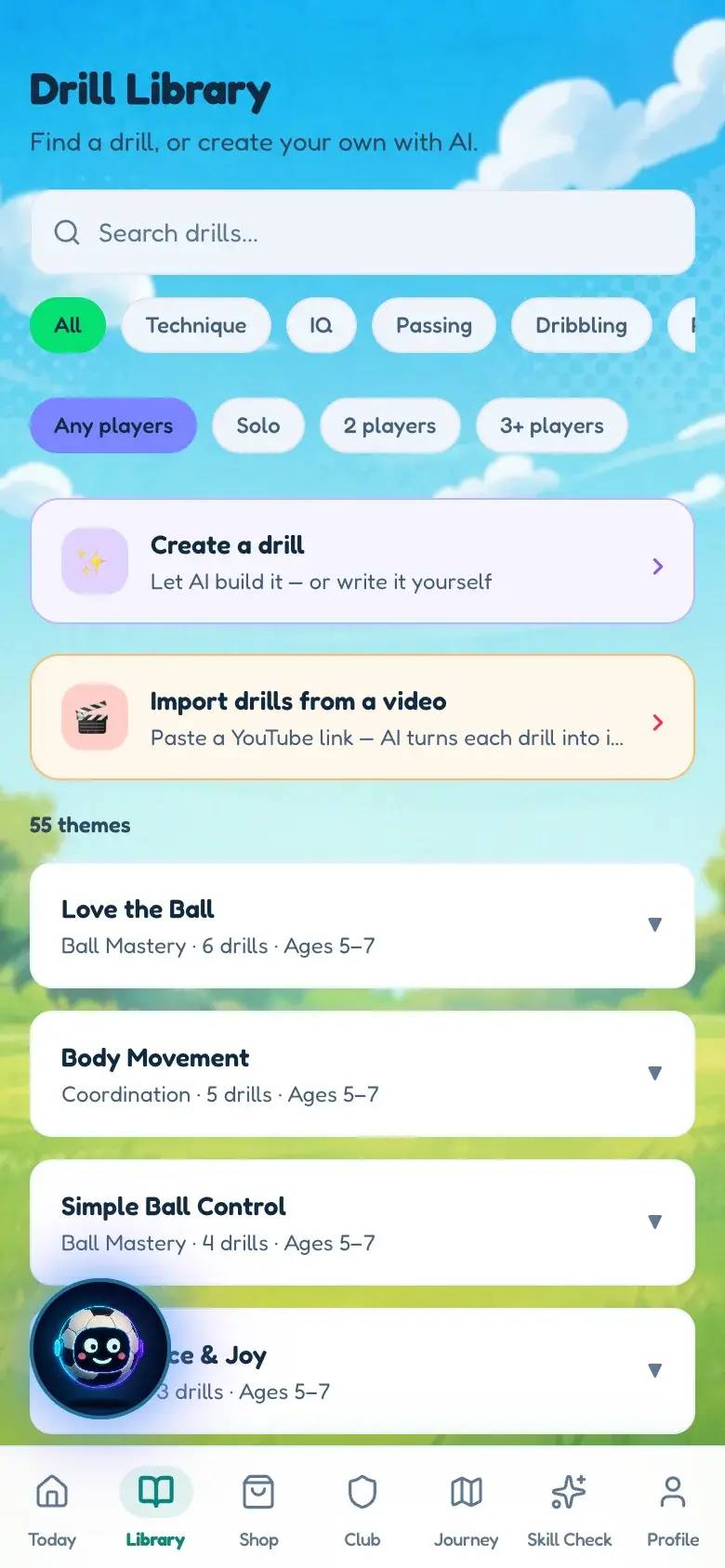
203 drills, graded year by year

From five-year-olds learning to stop a rolling ball to fourteen-year-olds working on a weak foot under pressure. Every drill says what to set up, how long it takes and what to look for.

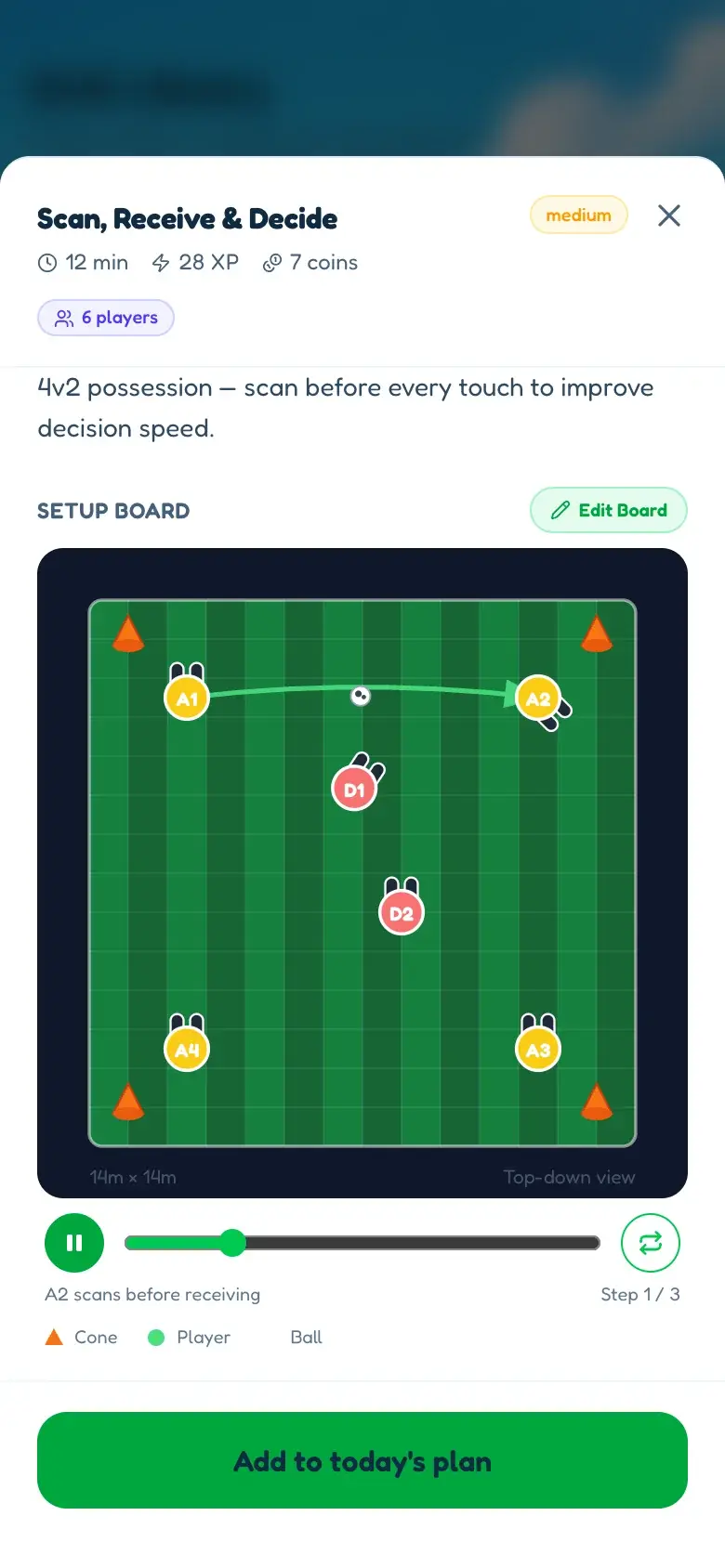
Then it walks through the thing step by step, with coaching points and the mistakes to expect — and an animated tactics board that plays the movement out, because the person reading might be eight.

A BallQuest drill on a phone, with an animated tactics board showing players, cones and the ball.
The coach

A session that fits today

Answer a few questions once — age, what the player wants to get better at, the gear in the shed, whether this is a garden, a driveway or a full pitch — and the coach builds the session out of the library to match.

It keeps up as the player levels up, remembers what was trained yesterday, and never proposes a drill there is no room for.

The BallQuest drill library on a phone: a search field, category filters and a list of themes.
Rivals

Training you can spend

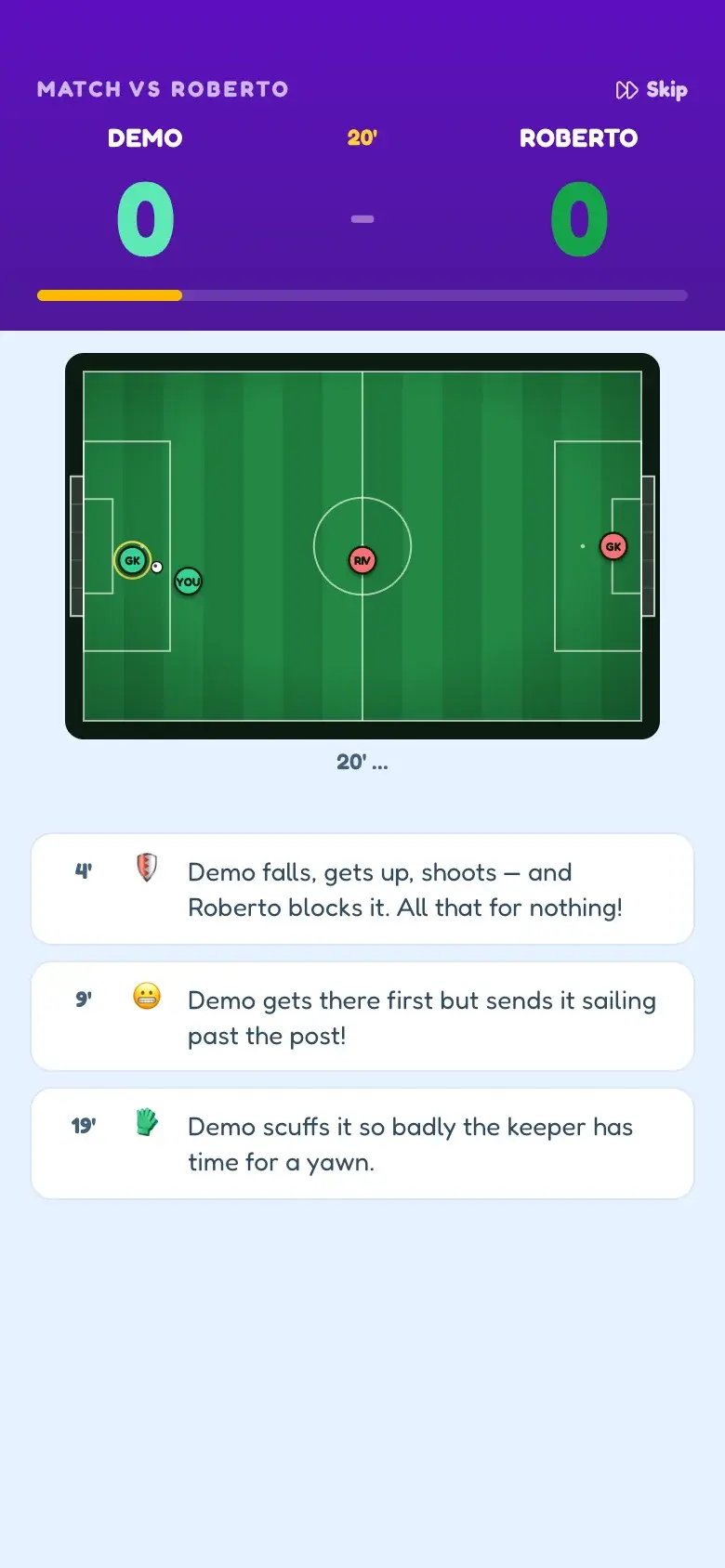
Each chapter is guarded by a rival who is strong in two particular stats. Train those, then play the match: ninety minutes on a pitch that moves, with the keeper diving about and a commentary line for every chance — and a scoreline decided by the stats the player has actually built.

Lose and the rematch stays shut until the right training is done. Win and the rival comes off the board — which is the whole point: the practice in the garden was worth something.

A BallQuest rival match on a phone: the score at 21 minutes, the move being played out on a pitch, and the highlights of the match so far.

Try it

Can you beat Lothar?

Lothar is the fourth rival on the journey — a German midfielder, so strength and game sense are the two stats he is built on. They count double when the match is decided. Choose how much the player has trained, and play it.

StatThe playerLothar
Technique00
Dribbling00
Passing00
Strength×200
Game sense×200
Chance of winning

The same numbers the app uses: focus stats count double, the scoreline comes out of the difference between the two ratings, and a rival duel is never a draw.

The coach in the corner

Kicksy, once a grown-up says yes.

Kicksy

Ask him to build today’s session

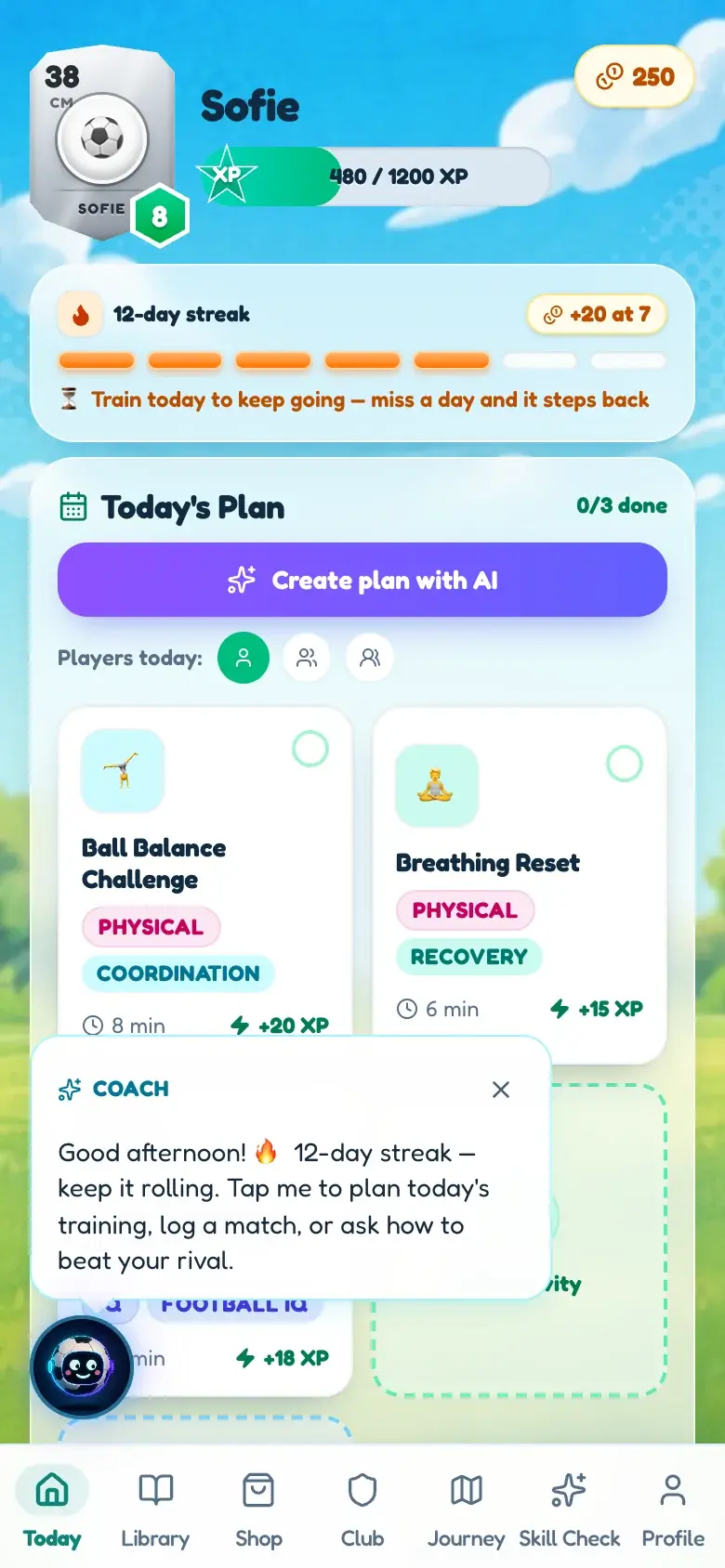
Kicksy sits in the corner of every screen. Tap him and he plans the day out of the drill library — around the player’s age, the gear in the shed and the twenty minutes there actually are — or you tell him what to aim at: the weak foot, the rival on Saturday, “I only have ten minutes”.

He also answers the question a child would never ask a grown-up twice: how do I beat this rival? He knows which two stats it is built on, and which drills move them.

The BallQuest home screen on a phone with the coach speaking from the corner: a greeting, the streak, and an offer to plan today’s training.
Skill Check

Film ten seconds of dribbling. Get it looked at.

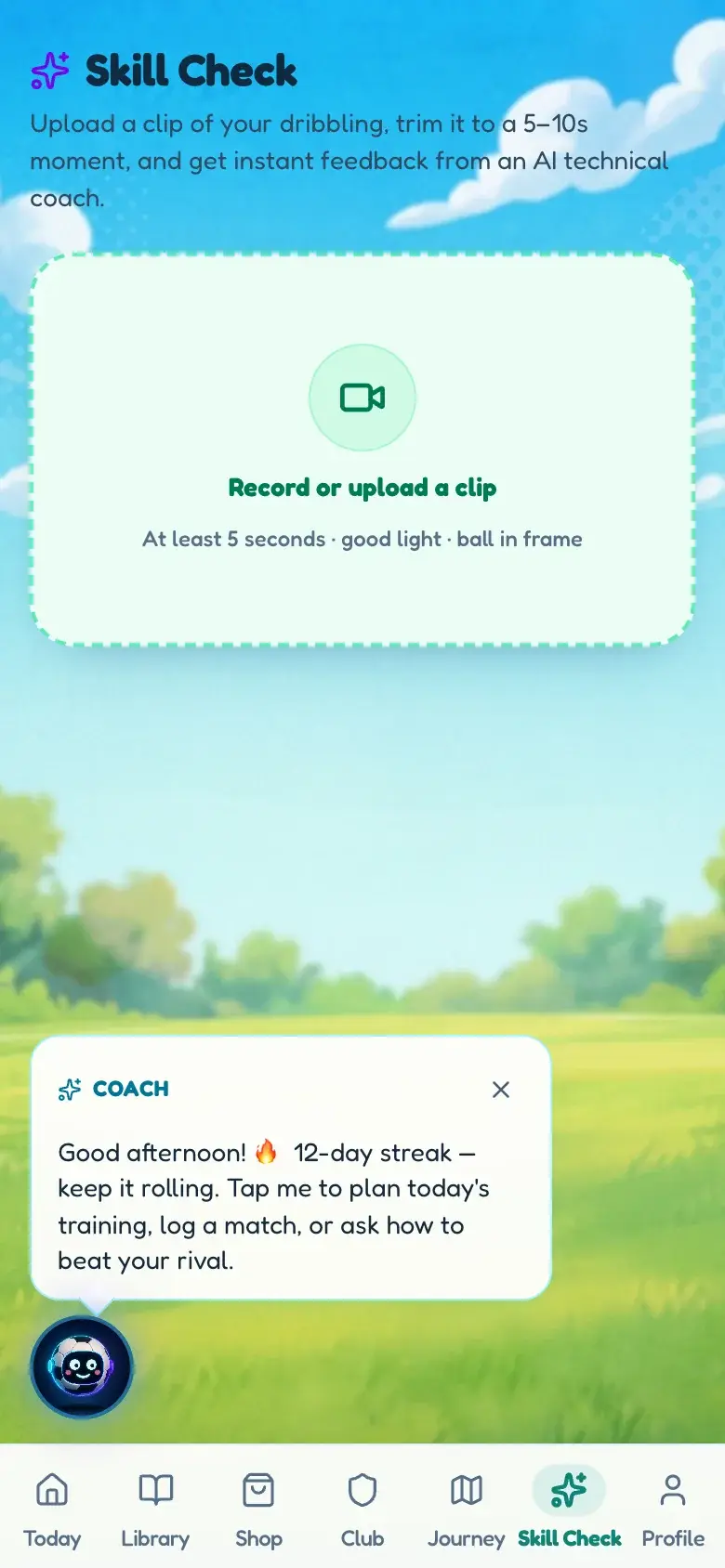
Record a five to ten second clip in the garden, trim it to the moment that matters, and Kicksy watches it the way a technical coach would: footwork, close control, body and head position, balance, both feet.

Back comes a score out of ten, the two or three things that were genuinely good, and the ones to work on next — in words written for a child, not a scouting report.

Kicksy is switched off until a grown-up turns him on, behind the family code — and switching him back off takes him out of every screen again. A clip or a photo then only leaves the phone when somebody presses send.

Skill Check on a phone: a panel asking for a five to ten second clip of the player dribbling, in good light with the ball in frame.

Together

Build a club with your friends.

Not the club they already play for — one they make up. A name, a crest, an invite code sent to four friends, and a treasury that only fills up when somebody trains.

Your club, your crest

Name it, pick the colours, and send the invite code to the friends who should be in it. It is theirs — nobody hands it to them.

One treasury, filled by training

Every member pays coins they earned in the garden into the same pot. A club with five players who train is rich; a club that talks about training is not.

Build the ground out of it

It starts as a corner of the park with jumpers for goalposts. Then a proper pitch, a stand for the parents, floodlights, a full arena — plus kit, balls, cones and a dugout. Each one is bought by the club, for the club.

A trophy cabinet you cannot buy

Honours come from the XP the squad wins together, and from nothing else. There is no way to spend your way into that cabinet, which is exactly why it means something.

Who showed up this week

The clubhouse shows the week: who trained, how much, and what it added to the pot. Not a ranking of who is best — a ranking of who did the work.

A club is shared with children in other families, so joining or leaving one asks for the family code. A grown-up decides who your child plays with — the child decides how hard they train for it.

And the rest

The parts you only notice when they’re missing.

A journey to follow

Chapters on a map, each with its own rival and its own skills. It shows where the player has been and what is next — the same reason a kid finishes a level in a game.

XP, coins and badges

Rewards are given for finishing a session, never for spending. Coins are earned on the grass and spent inside the app on things that cost nothing real.

Club training counts

Most weeks the real session happens at the club. Log it in a few taps and it counts towards the streak, the XP and the skills, exactly as it should.

Works out on the pitch

BallQuest installs to the home screen and keeps working without signal. Progress made on a field with no bars syncs when the phone finds its way back online.

A zone for grown-ups

Settings, rewards and what the family agrees on live behind a parent screen, out of reach of an eight-year-old with a plan.

BallQuest is not open yet.

Get the one email that matters.

It is being built and tested with real kids on real pitches. Leave your address and you will hear from us once — the day it opens.